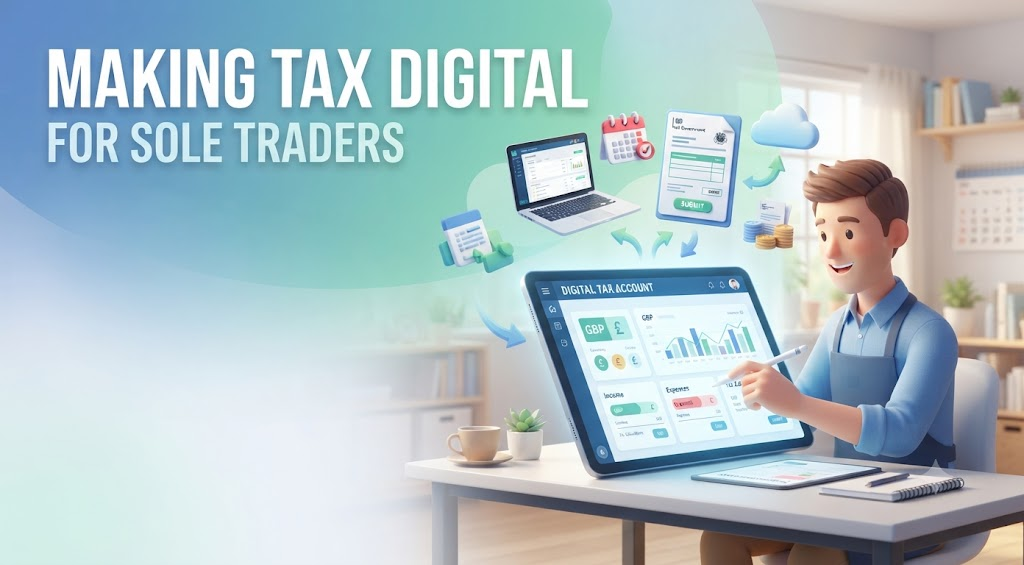
If you’re self-employed, you’ve probably heard about Making Tax Digital for sole traders. The UK government is transforming the way taxes are reported, requiring many sole traders to keep digital records and submit tax information using compatible software.
While the transition may seem overwhelming, understanding the new requirements now can help you avoid penalties, reduce administrative stress, and stay compliant with HMRC regulations.
In this guide, we’ll explain everything you need to know about Making Tax Digital for sole traders, including who it affects, when the rules apply, how to prepare, and why working with an experienced accountant like Account Ease can make the transition much easier.
What Is Making Tax Digital (MTD)?
Making Tax Digital (MTD) is a government initiative introduced by HMRC to modernise the UK tax system. Instead of completing one annual Self Assessment tax return, eligible taxpayers will keep digital financial records and submit updates electronically using approved accounting software.
The goal is to:
- Reduce tax errors
- Improve record accuracy
- Simplify tax reporting
- Make tax administration more efficient
- Help businesses manage finances throughout the year
For many sole traders, this represents one of the biggest changes to Self Assessment in years.
What Does Making Tax Digital for Sole Traders Mean?
Making Tax Digital for sole traders means that eligible self-employed individuals must:
- Keep digital records of income and expenses.
- Use HMRC-compatible accounting software.
- Submit quarterly updates to HMRC.
- Complete an End of Period Statement (EOPS).
- Submit a Final Declaration each tax year.
Instead of one annual submission, tax reporting becomes an ongoing process throughout the year.
Who Will Be Affected?
The rules apply based on your annual business and property income.
From April 2026
Sole traders and landlords with qualifying income exceeding £50,000 must comply with Making Tax Digital.
From April 2027
The threshold expands to individuals earning more than £30,000 annually.
HMRC has also announced plans to extend MTD to those earning over £20,000 in a later phase.
If you’re unsure whether you’ll be affected, it’s worth reviewing your annual income now so you can prepare well before the deadline.
Key Requirements for Sole Traders
Under Making Tax Digital, sole traders will need to:
Maintain Digital Records
Paper spreadsheets alone may no longer meet HMRC requirements unless connected through compatible software. Digital records should include:
- Sales income
- Business expenses
- Purchase invoices
- Business mileage
- VAT information (if applicable)
Keeping records updated regularly reduces mistakes and saves time.
Submit Quarterly Updates
Instead of waiting until January each year, you’ll submit summaries of your business income and expenses every quarter.
Quarterly submissions provide HMRC with a more up-to-date picture of your taxable income.
Submit an End of Period Statement
At the end of the tax year, you’ll confirm accounting adjustments such as:
- Capital allowances
- Business expenses
- Tax relief claims
Submit a Final Declaration
The Final Declaration replaces many aspects of the traditional Self Assessment return and confirms your overall taxable income from all relevant sources.
Benefits of Making Tax Digital
Although many business owners are concerned about the changes, there are several advantages.
- Better Financial Visibility
Regular updates allow you to monitor profits throughout the year instead of waiting until tax season.
- Fewer Errors
Digital accounting software reduces manual calculations and common bookkeeping mistakes.
- Improved Cash Flow Planning
Knowing your estimated tax position during the year helps you budget more effectively.
- Faster Access to Financial Information
Cloud accounting software allows you to view invoices, expenses, and reports anytime.
- Easier Compliance
Using approved software makes it easier to meet HMRC requirements and avoid missed deadlines.
Challenges Sole Traders May Face
Like any major change, Making Tax Digital presents some challenges.
These include:
- Learning new accounting software
- Managing quarterly reporting deadlines
- Maintaining accurate digital records
- Understanding HMRC’s evolving requirements
- Increased administrative responsibilities
Fortunately, working with an experienced accountant can eliminate much of this burden.
How to Prepare for Making Tax Digital
Preparation is the key to a smooth transition.
Choose HMRC-Compatible Software
Select cloud accounting software approved by HMRC. Popular options include Xero, QuickBooks, FreeAgent, and Sage.
Organise Your Records
Begin storing invoices, receipts, and expense records digitally.
Review Your Income
Determine whether your annual qualifying income exceeds the relevant threshold.
Learn the Quarterly Reporting Process
Understanding submission deadlines now will reduce stress later.
Work With an Accountant
Professional accountants can ensure your records remain accurate and your submissions comply with HMRC regulations.
How Can Account Ease Help?
Preparing for Making Tax Digital for sole traders doesn’t have to be complicated.
At Account Ease, we help sole traders across the UK transition smoothly to Making Tax Digital by providing:
- Digital bookkeeping support
- HMRC-compliant accounting software guidance
- Quarterly submission assistance
- Tax planning
- Self-Assessment support
- Ongoing accounting advice
- Dedicated accountant support
Whether you’re switching from spreadsheets or are completely new to cloud accounting, our team can help you stay compliant while reducing administrative work.
Common Mistakes to Avoid
Many sole traders encounter problems when preparing for Making Tax Digital.
Avoid these common mistakes:
- Waiting until the deadline to prepare
- Using incompatible software
- Failing to keep digital records
- Missing quarterly submission deadlines
- Mixing personal and business expenses
- Not seeking professional advice
Planning ahead can prevent unnecessary penalties and last-minute stress.
Final Thoughts
Making Tax Digital for sole traders is one of the biggest tax reporting changes introduced by HMRC in recent years. Although the new requirements involve more frequent reporting and digital record-keeping, they also offer better financial visibility and improved tax accuracy.
Preparing early is the best way to ensure compliance and avoid unnecessary complications. By adopting compatible accounting software and working with experienced professionals like Account Ease, sole traders can confidently meet HMRC requirements while focusing on growing their businesses.
Frequently Asked Questions
What is Making Tax Digital for sole traders?
Making Tax Digital is an HMRC initiative requiring eligible sole traders to keep digital accounting records and submit tax updates electronically using compatible software.
When does Making Tax Digital start for sole traders?
From April 2026, sole traders with qualifying income over £50,000 must comply. From April 2027, the threshold reduces to £30,000.
Do all sole traders need to register?
Not immediately. Whether you need to comply depends on your annual qualifying income and HMRC’s implementation timetable.
Can I still use spreadsheets?
Basic spreadsheets alone may not meet HMRC requirements unless linked with compatible bridging software. Most businesses will benefit from using approved cloud accounting software.
What software can sole traders use for Making Tax Digital?
HMRC-compatible software includes Xero, QuickBooks, Sage, FreeAgent, and other approved digital accounting platforms.
How can Account Ease help with Making Tax Digital?
Account Ease supports sole traders with digital bookkeeping, software setup, quarterly submissions, tax planning, and ongoing HMRC compliance, making the transition to Making Tax Digital straightforward and stress-free.
Read More: Top 7 Online Accounting Services Firms in London for Small Businesses