In a world where video content dominates digital engagement, creators are constantly seeking faster, smarter ways to bring stories to life. Traditional video production — filming, editing, and refining — can be time-consuming and require significant technical expertise. AI has stepped in to change that, and at the forefront of this shift is the Wan AI video generator.
By transforming simple text prompts into compelling visual narratives, Wan AI makes high-quality video creation accessible to anyone with an idea. Whether you’re a marketer crafting an ad, a travel creator documenting an experience, or a social media influencer sharing a moment, this technology enables expressive storytelling with minimal effort.
In this article, we explore how Wan AI video generator turns written prompts into visual stories, the core features that make it powerful, and how platforms like invideo have integrated it to further streamline the creative process.
What Is Wan AI Video Generator?
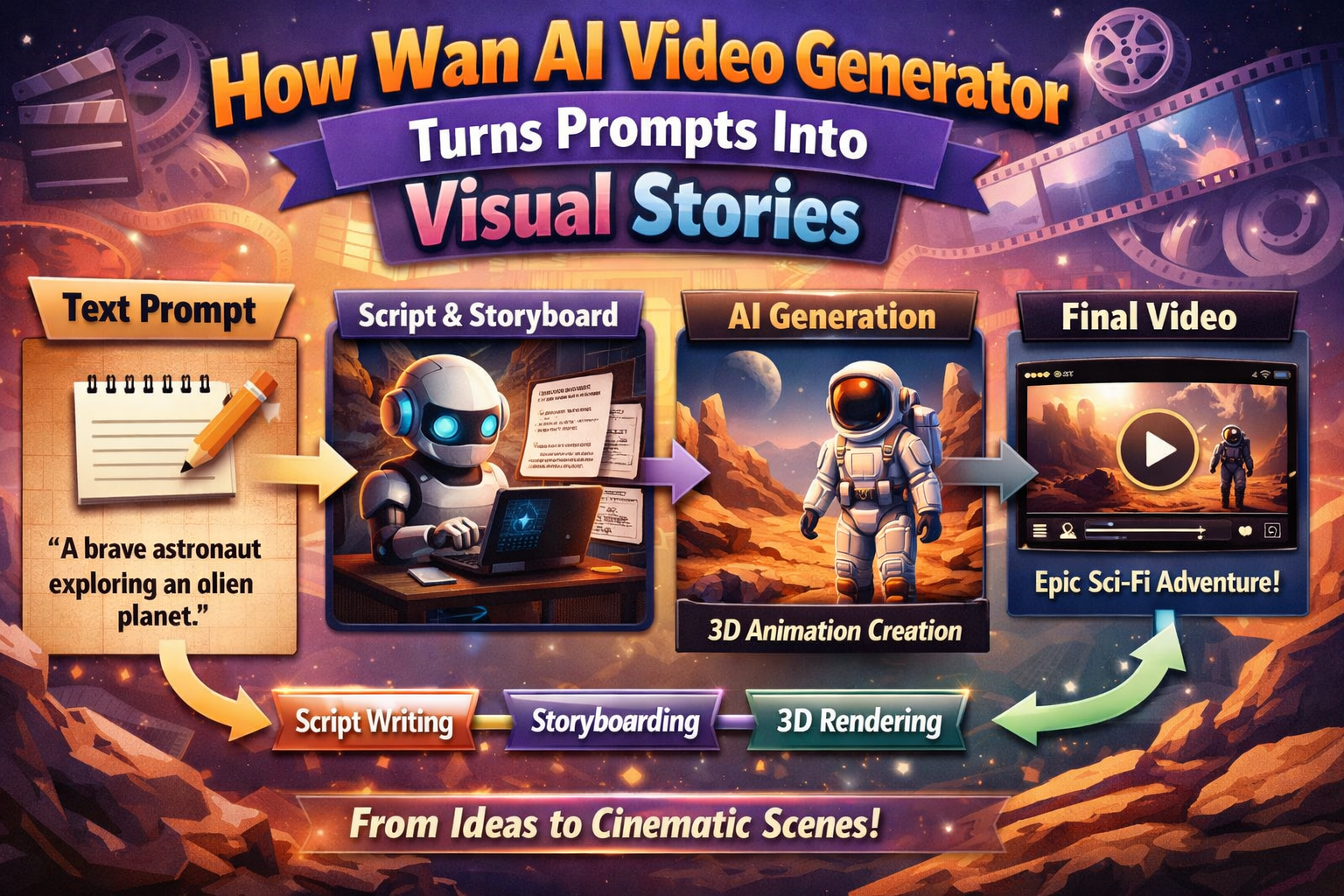
At its core, a Wan AI video generator is an AI-driven system that interprets written prompts — including descriptions, narrative cues, and stylistic instructions — and converts them into video output. Instead of manually compiling footage and editing timelines, users can simply explain what they want to see in text form, and the model generates a video that matches the description.
Imagine typing “a serene forest sunrise with soft piano music and gentle bird sounds,” and receiving a custom video visualizing exactly that scene. This is the promise of modern AI video generation: it democratizes production and removes much of the technical burden associated with filmmaking.
How Prompts Become Visual Stories
At first glance, turning a few sentences into a cohesive video might seem too good to be true. However, sophisticated machine learning models power this capability by blending several advanced techniques:
1. Deep Learning Interpretation
When a prompt is submitted — for example, “a lively street market at dusk with colorful lights and upbeat music” — the AI breaks down the text into structured concepts. It identifies key elements such as setting, mood, atmosphere, and sensory cues.
2. Visual Synthesis and Composition
Once meaning is determined, the model uses image and sequence generation techniques to build scenes. This includes placing objects, rendering movement, and crafting setting-appropriate lighting and textures. The result isn’t just a series of still frames — it’s a fluid visual representation that reflects the intent of the original prompt.
3. Audio Pairing (When Supported)
Some implementations of AI video generation also support automated audio layers. This may include background music, narration, or sound cues that align with the visual tone. Together, these elements contribute to a more immersive storytelling experience.
4. Flow and Narrative Structure
AI video generators analyze narrative flow — understanding how scenes might transition from one to the next. This helps connect disparate elements into a coherent visual story rather than disjointed shots.
As these processes unfold, the AI creates a video that matches the prompt’s emotional and narrative direction.
Creative Uses of Wan AI Video Generator
The ability to turn text into video opens up possibilities across many creative categories:
Social Media Content
Creators can produce daily clips, reels, or short stories without extensive filming or editing. This helps social media managers keep up with fast-paced content schedules.
Marketing and Advertising
Brands can quickly prototype multiple versions of ad creatives by tweaking the prompt. This enables A/B testing and rapid iteration without costly production.
Educational Materials
Instructors can generate visual stories to support concepts, helping learners by pairing visuals with explanations or narratives.
Personal Storytelling
Whether documenting travel experiences or sharing personal reflections, individuals can convert their ideas into emotionally engaging video narratives.
Challenges and Limitations
While AI video generation is powerful, there are limitations that creators should keep in mind:
- Prompt Precision Required: More detailed prompts tend to produce better visuals, so users must learn how to describe scenes effectively.
- Creativity Bound by Algorithms: Tools interpret prompts through learned patterns, so truly unconventional or abstract ideas may require refinement.
- Fine-Tuned Editing Still Valuable: AI generation is a starting point; users often refine videos with additional editing for final polish.
Despite these challenges, the benefits outweigh the downsides, especially for creators looking to scale content quickly.
Invideo’s Integration of Wan AI for Direct Access
One of the most exciting developments in the AI video landscape is how tools are being integrated into larger creative platforms. Invideo has now incorporated the Wan AI video generator directly into its suite of tools, giving users seamless access without requiring separate accounts or workflows.
This integration simplifies the entire process. Instead of using one platform to generate video and another to edit or publish it, users can now stay within invideo’s environment from start to finish. Invideo’s interface supports prompt input, preview, and refinement while automatically incorporating Bond AI output into editable timelines.
This means you can write a prompt within invideo, have Wan AI generate the initial video content, and then enhance it with text overlays, transitions, music, voiceovers, or additional footage — all in one place. For creators, this unified workflow removes friction and makes it easier to publish compelling videos fast.
By including Wan AI natively, invideo enables:
- Instant generation of videos from prompts
- Easy editing and scene refinement in the same workspace
- Quick access to tools without switching between platforms
- A more efficient storytelling process
This makes it ideal for marketers, social media managers, educators, and everyday creators who want to produce professional content without technical complexity.
Tips for Writing Better Prompts
Because AI content production depends on the input it receives, the quality of a generated video often reflects how clearly a prompt is written. Here are some tips for better results:
1. Be Specific About Setting
Instead of a vague phrase like “park scene,” say “a lively city park at sunset with children playing and gentle wind sounds.”
2. Include Emotional or Sensory Elements
Words like “peaceful,” “dramatic,” or “nostalgic” give the model context about mood and tone.
3. Add Style or Format Details
If you want a cinematic feel, mention “cinematic lighting” or “wide shots.” For storytelling, you might specify “sequence of close-up conversations.”
4. Combine Visuals With Audio Descriptions
If your tool supports audio, note whether you want voices, music, or sound effects.
The more descriptive the prompt, the more likely the final video will match your creative intent.
Examples of Prompts That Work Well
To illustrate how prompt design influences output, here are a few strong examples:
- “A serene beach sunrise with soft waves, golden light, and peaceful acoustic music.”
- “A bustling night market with colorful lights, animated crowd, upbeat local music, and soft narration.”
- “A forest trail in autumn with falling leaves, distant bird calls, and slow camera zoom.”
Each prompt describes setting, mood, and sensory cues — all elements that help AI generate richer visuals.
The Future of AI-Driven Video Storytelling
AI video generation is still evolving, but early signs show it will become deeply integrated into daily creative workflows. We can expect:
- Better emotional and narrative understanding
- More natural voice and sound integration
- Multilingual options for global storytelling
- Greater customization for styles and formats
Tools like Wan AI are paving the way for this future, and platforms integrating these models help democratize video creation for a broader audience.
Conclusion
The Wan AI video generator represents a significant evolution in how visual stories are created. By turning simple text prompts into compelling, narrative-driven videos, it removes traditional barriers and unlocks new creative possibilities. Whether you’re a social media influencer, a brand marketer, or an educator, AI video generation accelerates production and enhances storytelling.
With direct access now through video maker app like invideo, creators can generate, edit, and refine videos within one unified environment — making the production process faster and more intuitive than ever before.
As this technology grows, the way we create, share, and experience visual content will continue to transform. AI-driven storytelling isn’t just the future — it’s already here.